Should Brands Build Un-hackable Synths?
US Your Views on the New Synthesis Paradigm 23/10/26

|
At Sonicstate we've been delving into the new world of (often AI-assisted) firmware hacking recently. The gear targetted by these intrepid hackers is from a broad timeframe - from 1986's AKAI S900 to modern gear like the Elektron Model:Cycles and M-VAVE FM-1. Whilst some manufacturers (certainly M-VAVE!) may be currently seeing an uptick in hardware sales; it's unknown, as of yet, whether AI's rapid decompilation tools (and the highly customised firmware these will enable) will be good or bad for synth market in the long-term. Ever curious, I asked members of various internet spaces (Discord, Facebook, Gearspace, etc) to complete the following poll:
If a synth hardware manufacturer *locked down* firmware updates by using crypto chips or "eFuses" (One-Time Programmable memory)...allowing you to *only* use their current firmware and not run custom firmware or even older official firmware versions..what would you say?
• I will no longer support that manufacturer
• I'm okay AS LONG as the official firmware is good
• I'm happy; their product, their choice!
How do you build an un-hackable synth anyhow?
If a manufacturer wanted to build an un-hackable synth, they'd need to implement some sort of tamper-proof hardware on board, right? Surprisingly, this isn't in the realm of science fiction; such tools are commonplace in other industries.
First up, we have the trusted platform module - a specialized hardware security chip (or integrated processor feature) that safely stores cryptographic keys (up to 4096-bit!), digital certificates, and passwords behind a physical barrier. Although industrious hackers can sometimes use logic analysers to "sniff" the encrypted data as it travels around the motherboard...it's a fairly involved process (requiring expensive gear!) that would likely deter all but the most determined tinkerer.
The other option is so-called eFuse or OTP "One Time Programmable" technology. A good example of this is the NVIDEA Tegra X1 - a chip that powers devices like the Nintendo Switch, NVIDEA Shield and Google Pixel C. In plain terms, the chip features 32 "eFuse bits" and sending an electrical pulse to any one of the 32 fuses blows it forever - permanently altering the silicon.
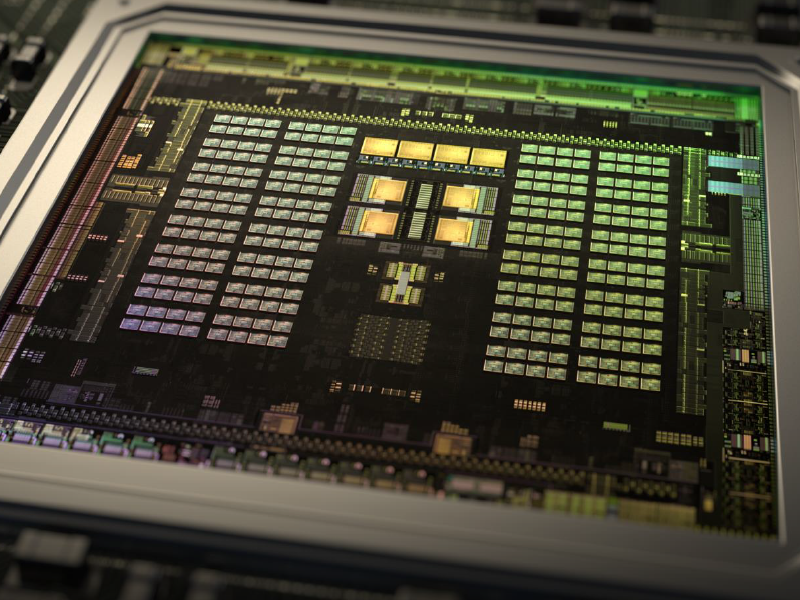
This simple act of self-immolation prevents users from downgrading their consoles to older versions, as the older firmware will refuse to run on a console without the right number of blown fuses. For instance, Switch Version 14.0.0 patched several browser vulnerabilities; those that allowed modders to hijack the console's memory using exploitable web links. Installing the update burned fuse 16 - and downgrading back to 13.0.0, which expects 15 blown fuses? No dice!
The Tegra X1 is, of course, overpowered for a hardware synth, however - modest STM32 chips that power a great number of digital and hybrid synths do also have their version of OTP tech - flash cells that can only be written to once, with no erase lines - and these could already exist inside synths you own, dormant and waiting to be turned on.
The Results
So we've seen that synth companies could lock things down, but should they? The 194 respondents answered thusly:
- I will no longer support that manufacturer 33.5%
- I'm okay AS LONG as the official firmware is good 28.0%
- I'm happy; their product, their choice! 34.68%
So there we have it - the majority of enthusiasts across both modular and general synth interest spaces seem to be ok with companies retaining control over their firmware. Now, I am aware that my poll lacks nuance, perhaps - but the discussions that came out of my imperfection were really insightful, so I feel that the exercise has been a successful one. Below is some paraphrased and anonymised food for thought - some ideas for both manufacturers and users to meditate on. Insert vintage clipart // ARGUMENT // OPINION.

Food for Thought
- Would including an open sandbox/SDK inside every new digital instrument be enough to satiate this community's hacking passion?
- How might a manufacturer be able to support or warranty an item that contained code other than their own?
- Is locking a synthesizer down an overtly hostile act? Should consumers have the right to "use" a purchased device in whatever way they see fit?
- Would restrictive policies be tolerated more if they came from certain, respected companies?
- Would certain market segments (live musicians?) actually favour locked down, stable firmware?
- Given the rarely perfect state of fimrware [sic] - would a device that can't be upgraded more than X amount of times be offputting?
- Should manufacturers open source products that they are no longer willing to support?
Thanks to everyone who voted and commented. For more insights on the state of modern synthesis, keep reading Sonicstate.com!
Posted by MagicalSynthAdventure an expert in synthesis technology from last Century and Amiga enthusiast.Get the latest headlines, offers and more in our dope sonicstate newsletter - delivered to your in box every week

- Kosheen - Hide U 23-Oct-26
- Northern Exposure with Sasha & Digweed 23-Oct-26
- Artists Favourite Calibre Tracks 21-Oct-26
- Mulch Box 21-Oct-26
- Look Mum No Computer Interview 20-Oct-26
Even more news...
Get Our Newsletter
More...
 AmiGUS mini: 24-bit Sound for Amiga 1200 & 600
32 Channel PCMCIA Soundcard in Beta
 SonicLAB: Lambda Synthetics Polypulse
Algorithmic Performance Workstation
 Will Vintage Gear become Liquidated E-Waste?
Geopolitics, CRTs, Antique Computers & Vintage Synths
 Movy For Ableton Move
16-Track Groovebox using Schwung hack
 Cherry Audio Memorymode 2 - Dual-Layer Architecture
800 presets and more of everything
 SonicLAB: Bitwig Studio 6.1 Update With Thavius Beck
Sampler gets a lot of new features


