Playing Live in the 90's pt1.
US The Headaches & Triumphs of Live Electronica 23/01/26

|
Live electronic music always presents technical challenges. Back in the 80's and 90's however, these performance issues felt more pronounced - acts couldn't just throw a bunch of modern CPU juice, RAM and reliable storage (Micro SD? SSD? The Cloud?) at the problem - instead; spinning hard drives, floppy disks and limited RAM were the order of the day!
Some folks (and their instruments) seemed to thrive in this environment. Ryan Marcantel, of 90's Industrial act FLUWID - kicked off this idea when we started chatting about my Roland DJ-70 sampler.
"Seeing it (DJ-70) just brought me back to 1995 when we used them; the fond memories of swapping disks out every 30 minutes to load samples was how we used to get our exercise in the clubs!"
With just 2MB of RAM and a single floppy drive (no SCSI on the DJ-70mk1!), you might think that this was asking for trouble. Miraculously, Ryan had no issues:
"We played almost every weekend for a few years consecutively, the DJ-70 is built like a tank and never once gave me major issues other than a random "loading error", to which I remember was resolved by ejecting the disk then inserting it again to load samples. The big bright screen was a life changer, especially since most of our shows were after midnight and alcohol was always freely flowing well before we went on."

Errors (and the need to reset!) are one thing - but loading time is a different concern entirely! Expensive hard disks were moderately fast, floppies? Glacial. Certain instruments, like the Ensoniq EPS & aforementioned DJ-70 would allow you to load one sample set whilst playing another - demanding a level of forward-planning. Sonic Talk regular Robin Vincent remembered:
"I did play my first gig with a Commodore 64 running accompaniment - it took 2 minutes to load each song."
Wow, what happened during those two minutes?
"I talked - I am fantastically enigmatic (people are kind)."

I guess throwing tomatoes had fallen out of fashion. Of course, some people had to make it hard for themselves, Brian Duffy:
"Was in a band in the 90s using a sampler and ten analogues... all had to be reset manually in between numbers."
I'd have loved to see that frantic on-stage repatching! Brian's reply certainly gave me a chuckle, but I also received some great musings from 90's Industrial legend John Norten (Trash Deity/Blue Eyed Christ). His memories of this era:
"I used an Akai S950 for live drum sounds and an Emax II for all the synth and vocal samples and noises. I will say one of the coolest things I ever saw, was in 1992 the Die Warzau "Big Electric Metal Bass Faced Tour". That was so next level nobody was doing it. Chris Vrenna was the Drummer, he had just left Nine Inch Nails. Instead of using any playback or background tape, they had sections of the songs triggered on pads. So in a verse, Chris would hit the verse pad that would trigger like the 2 bar verse loop.
While playing the drums He would hit the pad every two bars to re-trigger it. Then for the next section like a chorus he would hit the chorus, music pad and re-trigger that every two or four bars while playing the drums. It allowed them to not be locked into any arrangements and improv.. at the time everybody was either using tape or ADATs for playback, not an electronic band playing all live like that! This was 1992. I'm sure it went south a few times."
I love the idea of triggering electronic elements live. It puts quite a strain on whoever is doing it, but does afford you flexibility within an arrangement.
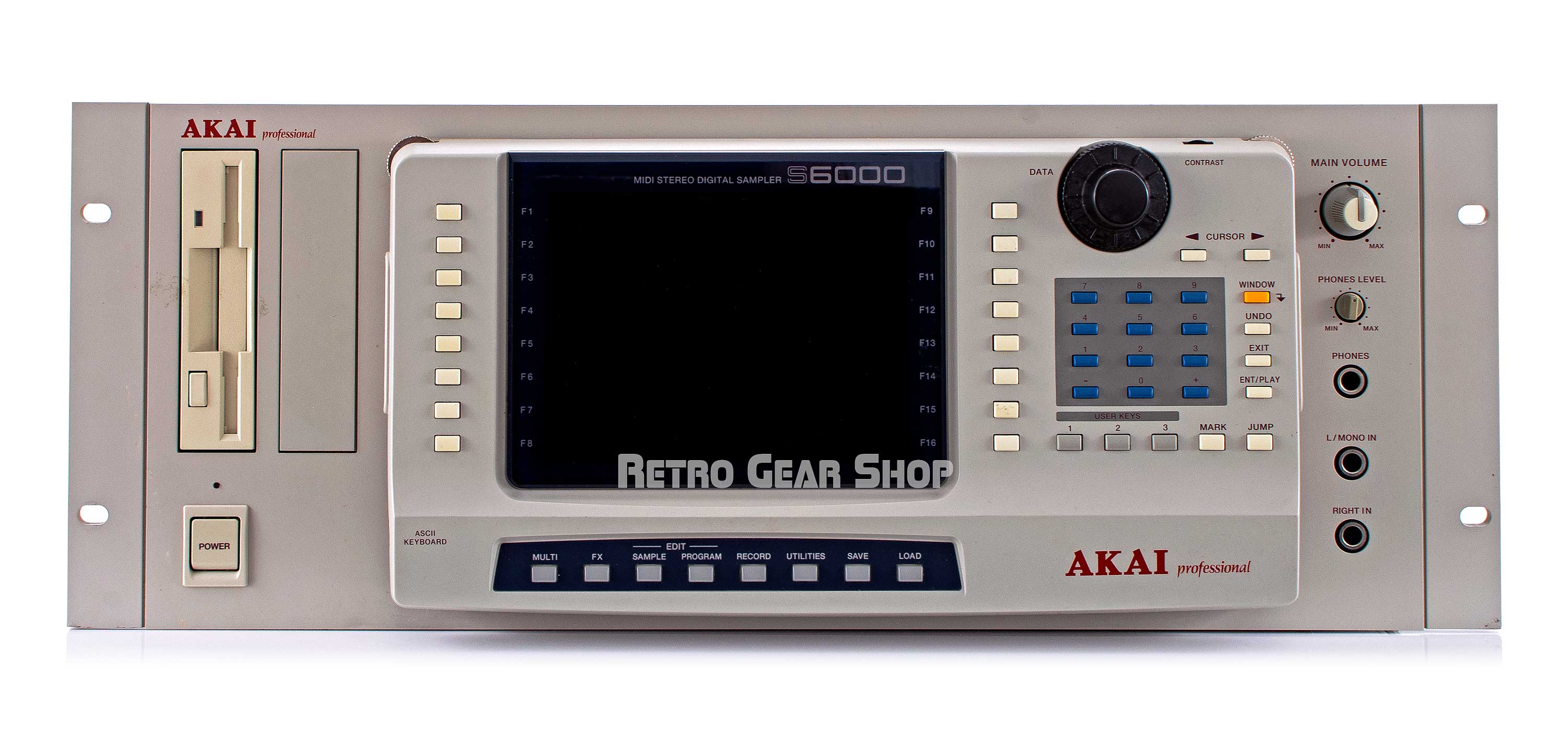
By the end of the 90's, RAM had gotten cheaper and technology marched forward. Journo & Podcaster Robbie Puricelli told me of his fondness for 1998's Akai S6000 (our second mention of the beige giant!), a 256MB machine with a surprisingly forward-thinking feature:
"Only time I used samplers live was my S6000 triggering loops, drum samples and backing tracks, either sequenced internally on the S6000's MIDI file player or via my Yamaha RM1x and Yamaha DTX drum kit. Never had an issue and everything was solid as a rock. The S6000's built in Set List feature made it a breeze selecting songs that automatically loaded all the samples, programs and multis required for each song when selected.
Solid as a rock. That Set List feature was a god send. Believe it or not, that feature was implemented by Akai at the request of Robbie Williams' musical director back in the day. They used two S6000's on stage, with the drummer just selecting the next song from the list and boom, there was part of Robbie's backing tracks."
That S6000 setup certainly feels more modern, secure, doesn't it? - but I wonder if the "seat of your pants" approach of earlier 90's gear created a little more jeopardy and excitement, and whether this could be sensed by an audience? What do you think?
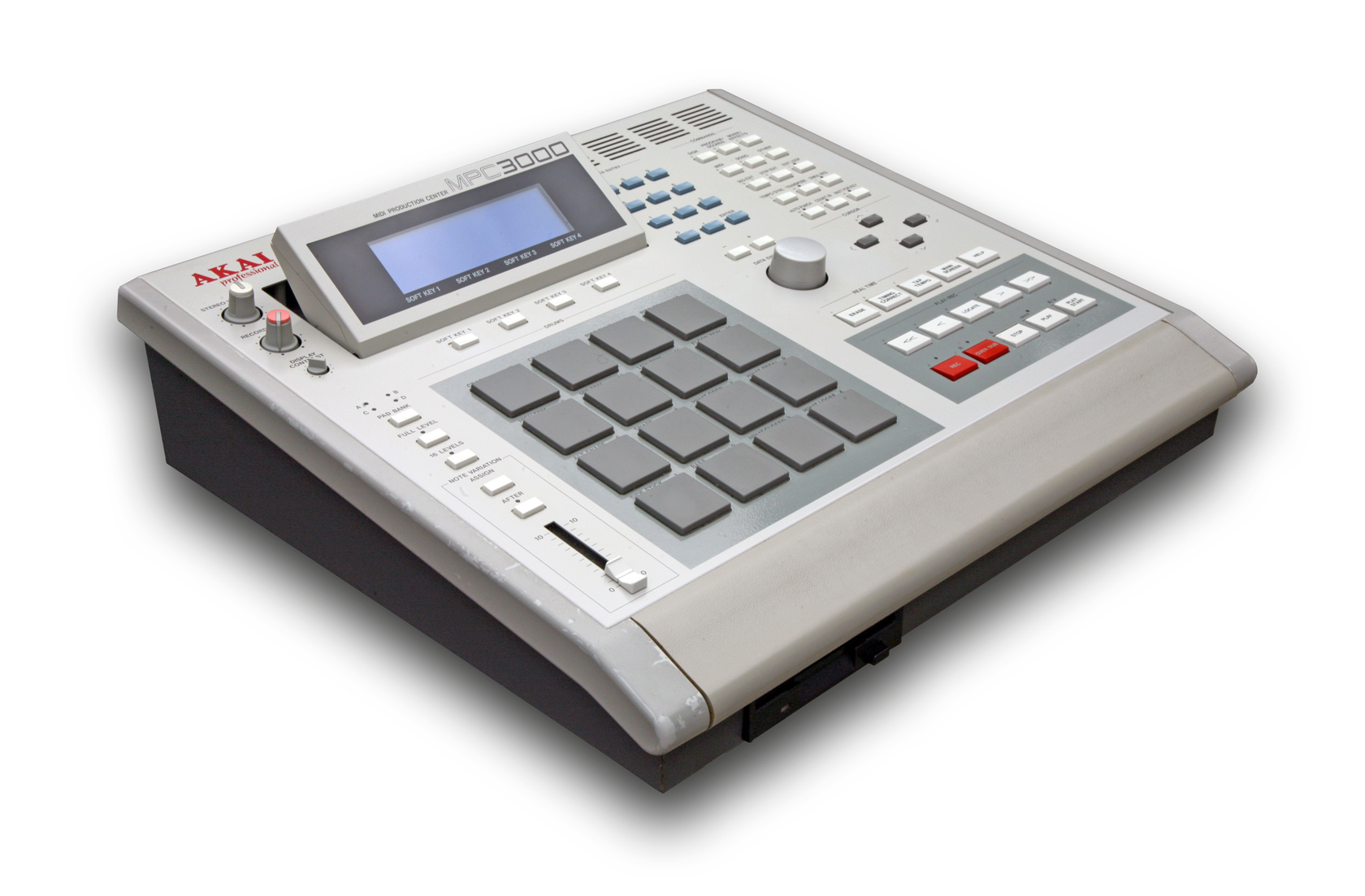
Finally, the solidity of Akai was echoed by Dadaist Ingmar Koch:
With Air Liquide or my solo show (Dr Walker), our main samplers for live were the SP1200 and MPC3000. At Ultraschall in Munich at one show it was so mega crowded that the sweat was dripping from the ceiling like rain. All gear worked, but when i stopped playing, like half a liter of "water" swamped out of the MPC3000!"
It's almost like Akai knew!
Finally, Gaz Williams gave me something to really think about:
"From experience, a major issue live is midi length. Midi gets really unreliable when it's over about three meters. You have to use repeaters or thru boxes. The kind of issues are frustrating because the cable doesn't seem like the culprit as it can be very intermittent in the faults. Program change not working 100% but like 90%. The problem was you'd assume it was the gear not the cable. It's meant to be ok for 10 - 15 meters but I wouldn't risk more than 3 now after some of those problems. I'm guessing this was as big an issue back in the day as it was for me 15 years ago."
Please let us know how you fare with long MIDI cables, are they cursed? Also, we'd like to hear about your 90's live triumphs (or horror stories!) See you next time for more 90's tomfoolery!
Posted by MagicalSynthAdventure an expert in synthesis technology from last Century and Amiga enthusiast.Get the latest headlines, offers and more in our excellent sonicstate newsletter - delivered to your in box every week

- 10 Minutes with HUM 2 28-Sep-26
- Apparat's Live Setup 25-Sep-26
- Kemistry & Storm Interview 23-Sep-26
- Top 10 Video Game Soundtracks 23-Sep-26
- Simon The Magpie's Fluxophone 22-Sep-26
Even more news...
Get Our Newsletter
More...
 SinTH2 60 Voice Monster Polysynth
All digital hardware beast
 Sonic RETROCAST 4 - Robert Henke AKA Monolake
Retro computing live and other topics
 The Bristol Old City Studio - Drop In Tour
We take a tour and find a Polymoog too
 SonicLAB: Behringer FLOW4V 32-Bit Float Recorder
And FLOW4VIO
 SonicLAB: Korg Nu:Tekt NTS-4 Performance Mixer
With FX and 2 Ch USB audio
 SonicLAB: Genki Katla With Venus Theory
We look at the volcanic synth


