For the Love of PT2399: Pt.2
US More Examples of this Chip in Action! 13/06/25

|
Last time we looked at a few designs featuring the PT2399 - a chip created in 1998 Princeton Technology. Designed initially as a Karaoke "echo" effect, the chip basically consists of an ADC, DAC & 44KB of RAM as a delay buffer. The "supposed" max delay time of this fairly pristine digital chip is 340ms - but it can, of course be pushed beyond that at the expense of fidelity. It can also be easily interfaced with external components, e.g. modulation sources or filters - mimicking BBD delay or chorus effects to great, err, effect.
This time, we look at a few more designs that utilize the PT, each with something interesting to offer. Unlike last week, I haven't personally played with these devices - but the features and audio demos have impressed me.
AXIS Modular LK Delay II
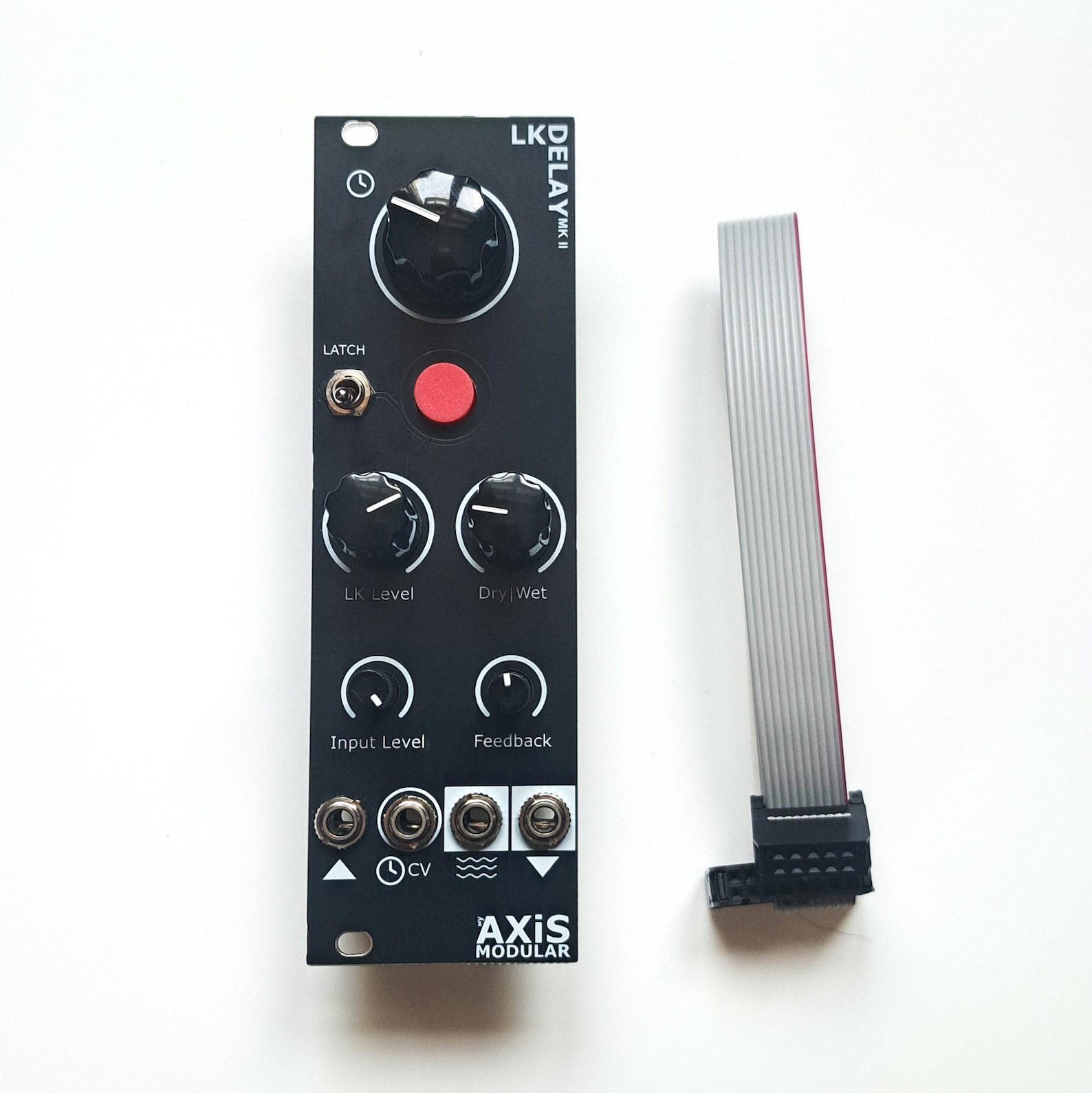
The LK delay, like most of AXIS's modules seems to be good value, at £99 - with a kit version for a mere £69.99. The device has a unique feature amongst delay modules:
"The LKDELAY MKII features CV control over the delay time via the clock input and a momentary LOCK button and newly added latch switch, which when pressed or engaged delay feedback will become locked. Lowering the LK Level can produce some wonderful effects such as a 'fake' reverb or chorus type sound. This delay really comes to life when playing the controls. Combine holding the lock button with moving the TIME control for interesting evolving and glitchy textures."
Sounds fun! Oh, and it's available in two distinct flavours:
"The LKDELAY MKII now also comes in two different flavours!!
Black - 30ms - 400ms delay time. Will give a higher quality delay signal.
White - 30ms - 800ms delay time. Gives you a slower delay but lower quality 'grungy' delay which can be quite a bit noisier than the black version."
No surprises for guessing which version interests me! Check out Robin's build video of the MK1 to see if it's for you!
The "Little Angel Chorus" Pedal

This DIY project is quite interesting; instead of seeking long, glitchy delays out of the PT2399, we want the shortest time possible to add our modulation to - creating a chorus effect. Electrosmash suggests that extra circuitry may be required to stop the chip locking up/crashing:
"During the power-on of the circuit, if the delay resistance from pin 6 to ground is less than 2k_ then the PT2399 may latch-up, which will make the chip to crash and stop. If a very short delay time is required, ensure that the delay resistance is greater than 2k_ for the first 400ms after power on. After the first 400ms, the pin6 resistance to ground can go as low as needed."
I guess it's like the electrical equivalent of Indy swiping the Idol and replacing it with a bag of sand. This article suggested that Pin 6 is where we send the LFO magic, but this thread on freestompboxes suggests otherwise:
"I've had the idea to try a PT2399 chorus ever since I modded my Clari into a Clari Cubed. The challenge with the PT2399 is to get the delay time as short as possible while still having some wiggle room for the LFO injected into pin 6. I've tried PNP, NPN, FET and LDR - fail! The delay time is either too short for the LFO to have any wiggle, or too long and latency is obvious.
So, screw using pin 6, just ground the MF for the shortest possible delay time and instead modulate the vref at pin2. Shortest possible delay with as much LFO wiggle as you want. In fact it has to be tamed down or you're into tape wobble type effects."
A colourful insight into how such designs come to fruition!
Pittsburgh Modular Cascading Delay Network

Well, this is kind of embarrassing, but this 2020 module completely passed me by! Slap on the wrist completed, it's a 28HP module containing no less than four(!) PT2399 chips and an analogue switching network that allows each delay (plus their feedback paths!) to be connected in a myriad of ways.
"A study in complexity through simplicity. The Cascading Delay Network combines four 750ms voltage controllable delays with a labyrinth of internal analog signal routing to create a tangle of unique time based effects. Five distinct Cascade Modes internally reconfigure the delay lines and feedback paths with the press of a button creating long unified repeats, dense sonic clouds, multi-tap delays, or multiple effects at once."
Interestingly, the module is fitted with calibration trimmers that allow you to re-voice the module how you'd like:
"The delay time of each channel in the Cascading Delay Network is calibrated to a range of 45ms to 750ms per channel. However, the max delay time can be configured per channel to anywhere between 55ms and 2800ms by using the 4 trimmer on the rear of the module. As the delay time increases, the quality of the audio source will degrade (a lot) but depending on your needs, longer delays can be fun."
Well thanks a lot, now I need to find one and set all those trimmers to 2800ms for 4 cascaded lines of grunge! The module is discontinued, but second hand units pop up from time to time, good luck!
I hope you've enjoyed this further dive into the magical world of the PT2399, see you next time!
Posted by MagicalSynthAdventure an expert in synthesis technology from last Century and Amiga enthusiast.
Get the latest headlines, offers and more in our great sonicstate newsletter - delivered to your in box every week

- Kemistry & Storm Interview 23-Sep-26
- Top 10 Video Game Soundtracks 23-Sep-26
- Simon The Magpie's Fluxophone 22-Sep-26
- Free Akai Sampler & MPC Firmware Mods 22-Sep-26
- Terrifying Sounds From Schoolkids 22-Sep-26
Even more news...
Get Our Newsletter
More...
 Erica Synths Razornator - Sonic Demo
5 stereo Chromatic resonators in a desktop effect
 3D Design Print Your Own Synth Stands With Loopop
Web app for your custom stands
 SinTH2 60 Voice Monster Polysynth
All digital hardware beast
 Sonic RETROCAST 4 - Robert Henke AKA Monolake
Retro computing live and other topics
 The Bristol Old City Studio - Drop In Tour
We take a tour and find a Polymoog too
 SonicLAB: Behringer FLOW4V 32-Bit Float Recorder
And FLOW4VIO


